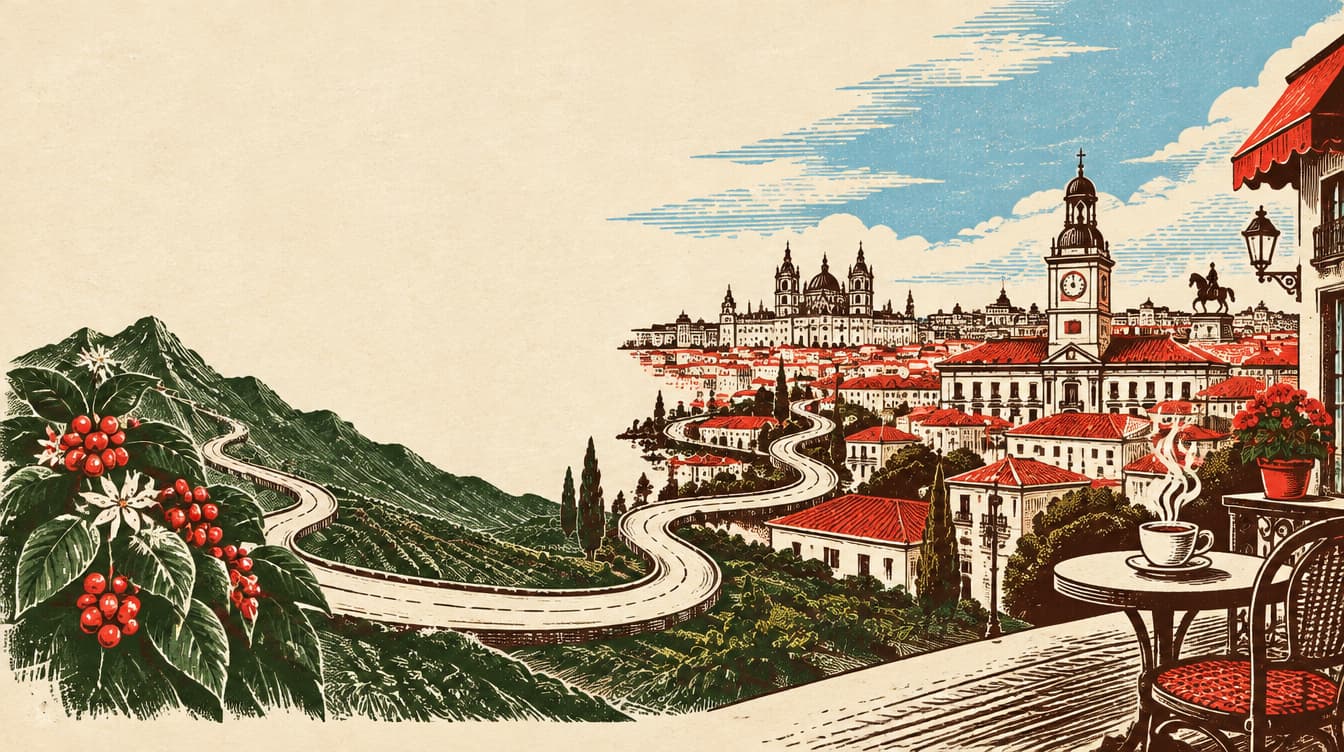
Eight stops between 1765 and today
-
1765
Madrid's first café
Madrid's first café is considered to have opened in 1765. Sources disagree on the exact venue, but agree on the date. It was a place for conversation, although hot chocolate remained the favourite drink.
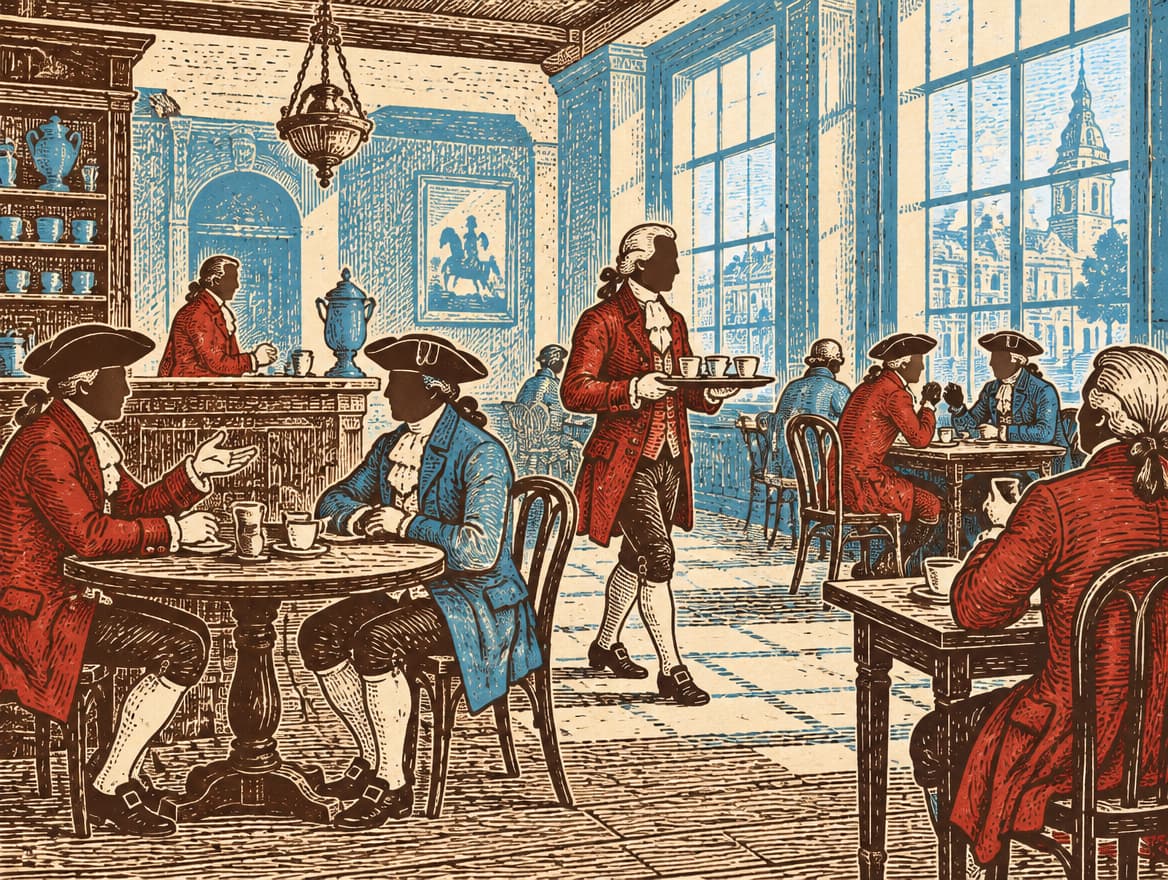
AI-generated illustration -
19th century
Coffee from overseas
The coffee drunk in Spain came from the American colonies.
-
1936–1939
The war and torrefacto
The Spanish Civil War kept imports and consumption low. With coffee scarce, torrefacto gained strength: sugar is added at the end of roasting, the bean keeps longer and defects are hidden.
-
2011
Toma Café, Calle de la Palma
Patricia Alda and Santiago Rigoni open a tiny place in Malasaña that talks only about specialty coffee. At the time it was pure exoticism.
-
~2014
The scene takes off
The number of cafés doubles, the first National AeroPress Championship (Spain) is held and the Festival Español del Café (Spanish Coffee Festival), 2015, is announced.
-
2016
A Spanish champion
Carlos Zavala wins the first national AeroPress title.
-
2020–2023
After the pandemic
Acceptance speeds up. In 2023 CoffeeFest Spain arrives; its organiser links it to very fast growth in interest.
-
2025
A market that is no longer a niche
In April 2025 there were 2,215 branded cafés in Spain, chains included. In Madrid, Chamberí is the neighbourhood where specialty cafés have multiplied most.
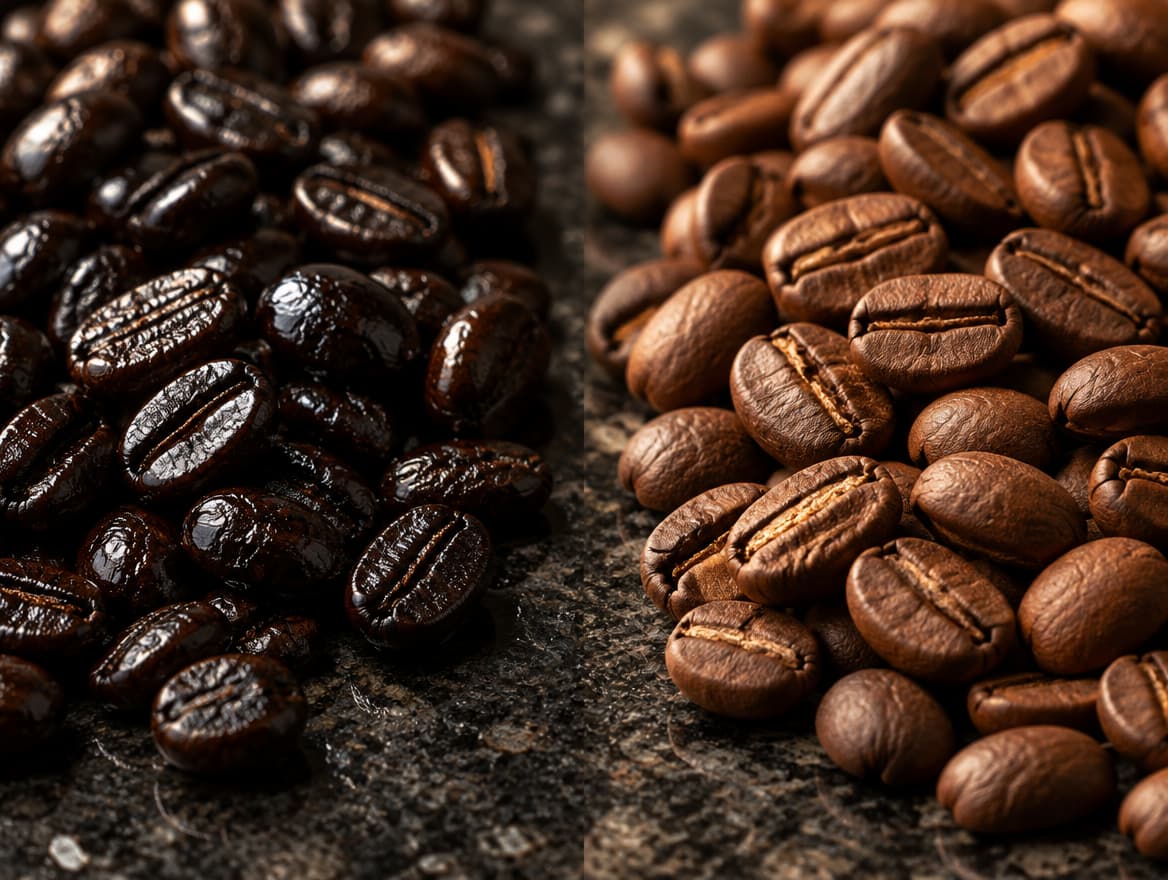
Torrefacto or specialty: look at the bean
 Torrefacto
Specialty
Torrefacto
Sugar is added at the end of roasting. The bean ends up black and shiny, and the taste dark and bitter.
Specialty
Roasted without sugar, designed so the origin comes through.
At the supermarket
Many supermarket blends still contain torrefacto.
Today's figures
80% of Spaniards surveyed drink hot coffee every day. (Source: Project Café España 2025, World Coffee Portal.)
Third-party figures. The last two are estimates by a roaster.
Madrid today: from Malasaña to Chamberí
- Malasaña saw the birth of the first Toma Café in 2011.
- Chamberí is now the neighbourhood where the most specialty cafés have multiplied.
- The momentum began in Madrid and Barcelona. Today it is also felt in Valencia, Andalusia and Galicia.
- A Madrid café owner doubts that supply is growing at the pace of demand.
What now?
- More education: the industry wants to normalise filter coffee, ideal for appreciating specialty coffees.
- More chains: McCafé (539 outlets), Starbucks (181) and Santagloria (165) grew by double digits up to April 2025.
- More price pressure: green coffee is expensive and volatile, and roasters expect the cup to go up.
Questions
Frequently asked questions
Another question? Write to us →01When did Madrid's first café open?
It is considered to have been in 1765. Sources disagree on the exact venue.
02What is torrefacto?
Coffee roasted with sugar added at the end. It became popular in the early 20th century, spread after the war and still appears in many supermarket blends.
03Where did specialty coffee start in Spain?
It first took off in Madrid and Barcelona. Now it is also felt in Valencia, Andalusia and Galicia.
04Is it still growing?
Yes: three years in a row of net growth in branded outlets up to April 2025. Even so, some owners doubt that demand will catch up with supply.