Home / Journal / Decaf coffee: how it's made, how much caffeine it has and how to choose a good one
Origin and process
Decaf coffee: how it's made, how much caffeine it has and how to choose a good one
You love coffee, but not at eleven at night. Decaf has a bad reputation. Often the problem is not the decaf, but the bean that was used.
How much caffeine does decaf have?
Compare a cup of decaf with other drinks. Move the slider to change how much coffee you use.
With 18 g of decaf coffee, the cup has at most about 18 mg of caffeine.
Reference figures from EFSA (the European Food Safety Authority). The decaf maximum comes from the legal limit of 0.1% caffeine in roasted coffee; in practice it is usually lower, because not all the caffeine ends up in the cup.
How is caffeine removed?
It is all done with green coffee, before roasting. Then the bean is dried and roasted like any other. These are the usual methods:
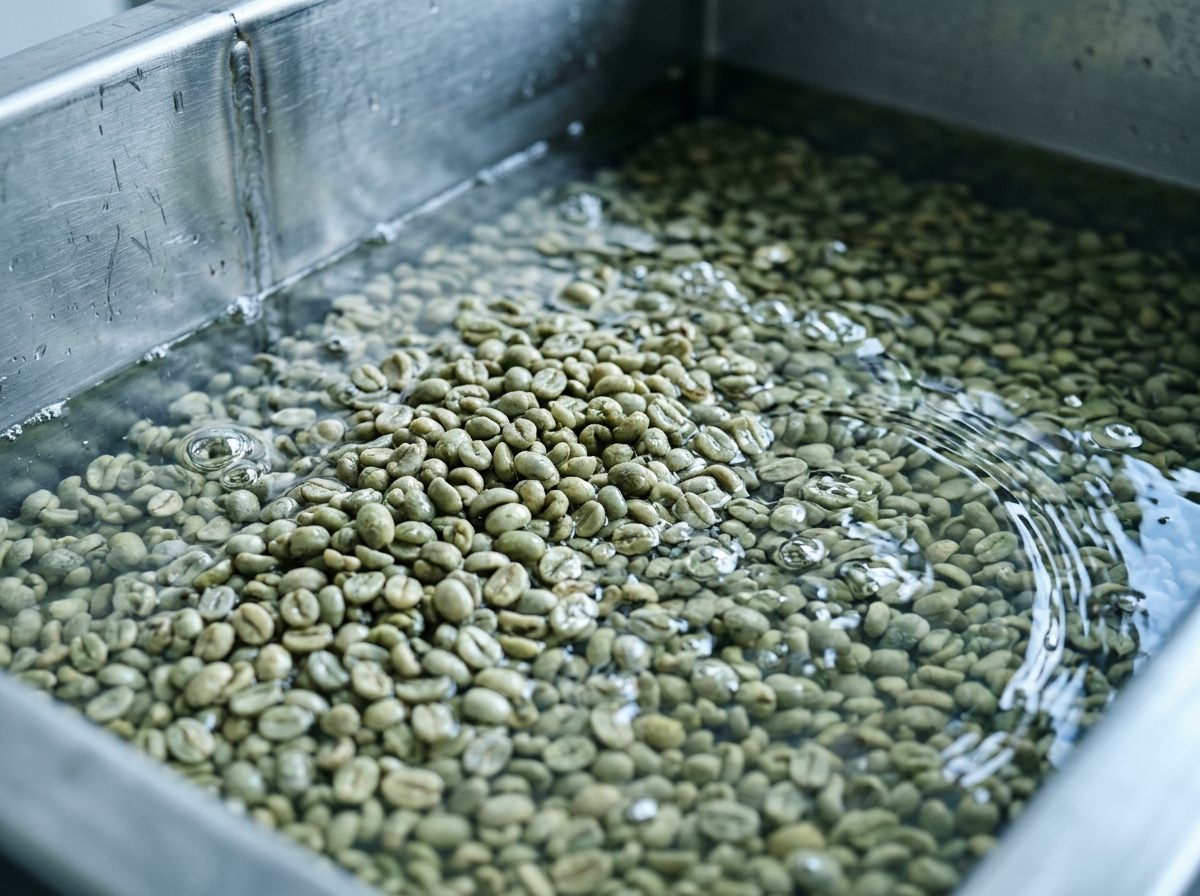
With water
Green coffee is soaked and the caffeine is taken out with water and filters, without solvents. This is the one you will see as "water-processed decaf".
With CO₂
Carbon dioxide at high pressure carries away the caffeine and leaves almost everything else.
With ethyl acetate
A compound that is also found naturally in some fruits. In Colombian coffee it is often made from sugar cane.
With dichloromethane
Very effective. It is approved in the European Union with a residue limit of 2 mg per kilo of roasted coffee.
Source: Directive 2009/32/EC on extraction solvents (in Spain, Royal Decree 1101/2011).
Is it safe?
The methods and solvents used in the European Union are regulated and have residue limits.
If you prefer to avoid solvents, look for water-processed or CO₂ decaf, and ask which method was used.
Five things to look for
- The method: a good roaster can tell you how it was decaffeinated.
- The origin: country and region, as with any specialty coffee.
- The date: a recent roast shows in decaf too.
- The flavour: specific notes, not just "smooth".
- The grind: whole bean, or ground when you order.
How to brew it so it tastes good
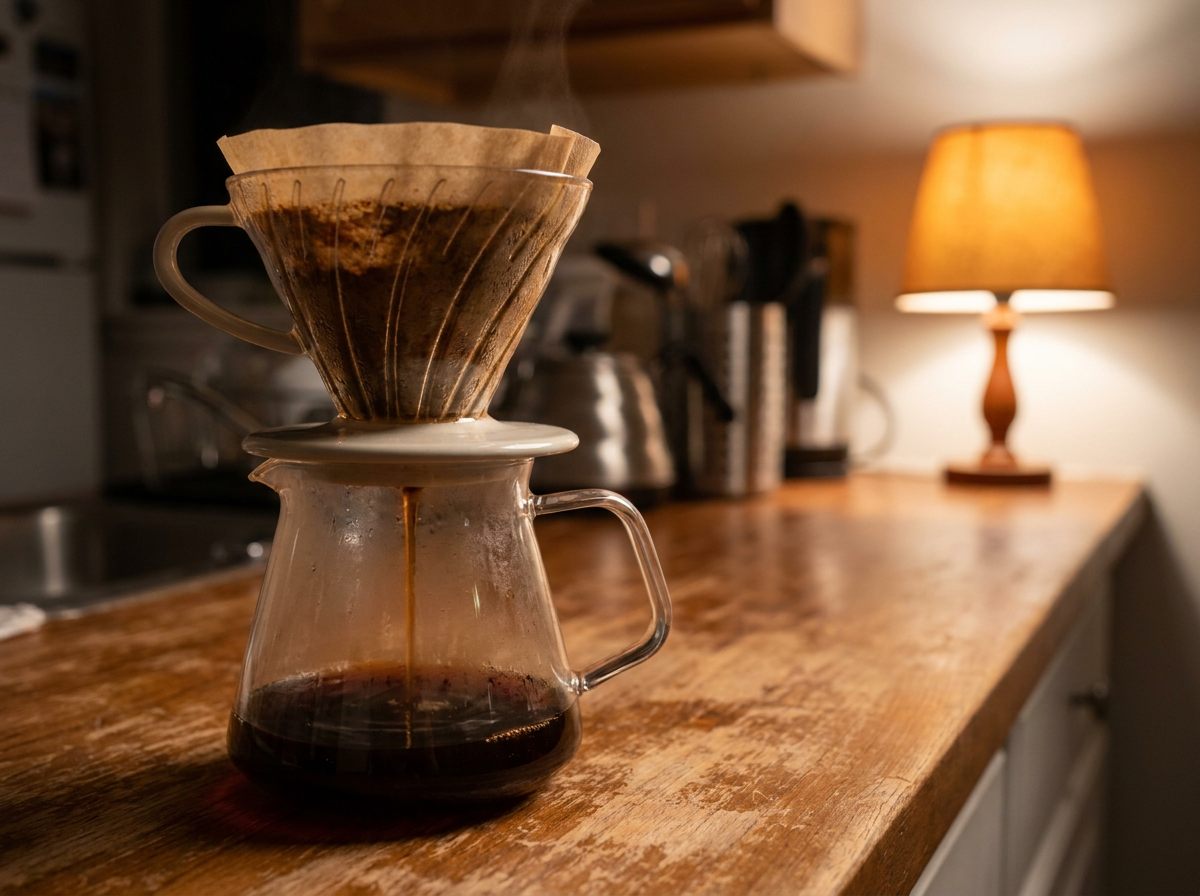
Use the same recipe as with normal coffee.
If it comes out bitter, try a slightly coarser grind or slightly cooler water.
Questions
Frequently asked questions
Another question? Write to us →01Does decaf coffee have caffeine?
Yes, a little. By law, roasted decaf coffee can have at most 0.1% caffeine, against a minimum of 0.7% in normal coffee.
02How much caffeine is in a cup of decaf?
It depends on the coffee you use. With 18 g of decaf coffee, at most about 18 mg. A normal espresso is around 80 mg, according to EFSA.
03How is caffeine removed from coffee?
While the coffee is still green, using water, CO₂ or approved solvents. Then it is dried and roasted.
04What is water-processed decaf?
A method that removes the caffeine with water and filters, without solvents.
05Can I drink decaf at night?
It has very little caffeine. EFSA says that about 100 mg close to bedtime can affect sleep in some people; a cup of decaf is far below that.